An opal is one of the few gemstones that reacts to the way you keep it. Leave a solid opal in a dry drawer for a year and it can develop a network of fine surface cracks. Leave a doublet on a sunny windowsill and the glue layer can cloud. None of this happens dramatically. It happens quietly, while the jewellery sits unworn, and you usually notice it long after the damage is done.
The fixes are simple and almost free. Here are the storage mistakes worth avoiding, and the habits that keep an opal bright for decades.
Why opals are more sensitive than they look
Opal is silica with water bound into its structure — typically a few per cent, held within the tiny spheres that produce the play of colour. That water is part of what makes the stone what it is. Lose it slowly and the structure can shrink and craze, dulling the flash. Lose it quickly and the cracking can show within weeks.
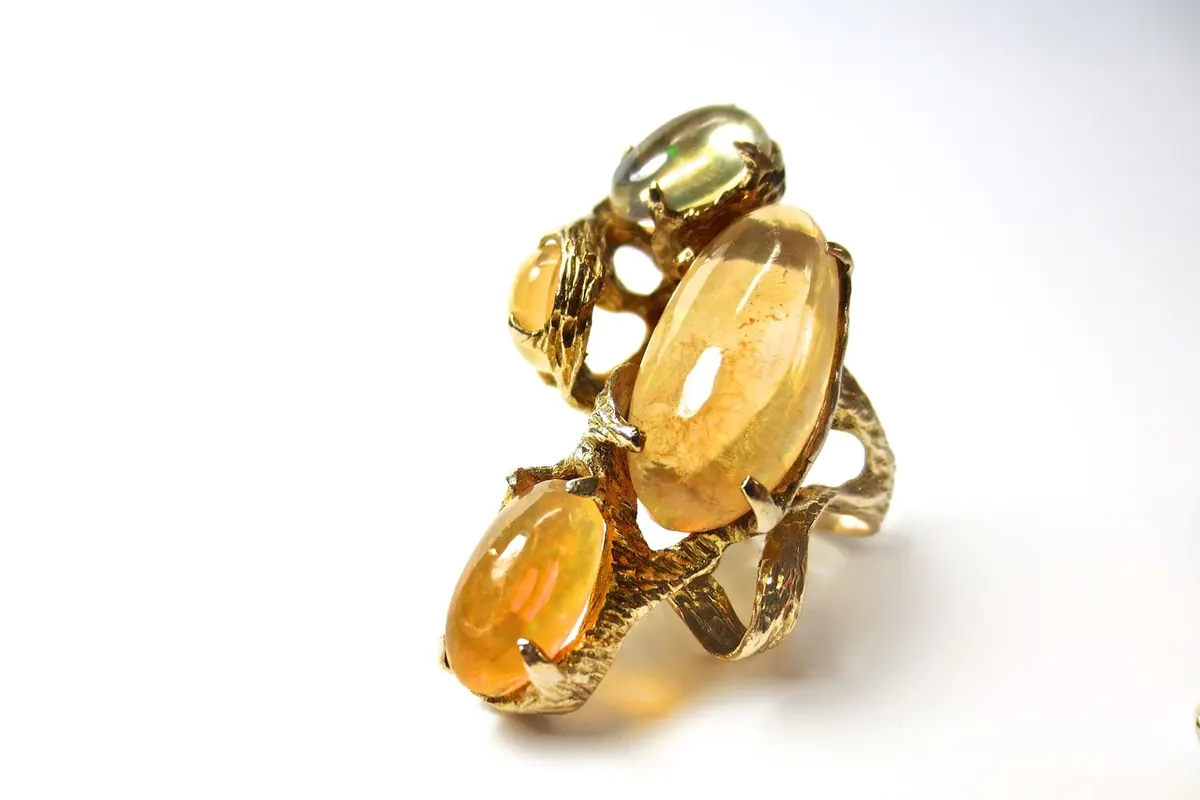
Add opal's softness — it sits around 5.5 to 6.5 on the Mohs scale, softer than quartz — and you have a gem that needs more thought than a diamond or a sapphire. Doublets and triplets, where a thin slice of opal is glued to a backing and sometimes capped with quartz or glass, add a second vulnerability: the adhesive.
Mistake 1: storing opals in air that is too dry
Central heating, air conditioning and dehumidifiers all pull moisture out of the air. So do home safes and bank boxes, particularly when a silica gel sachet has been tucked in to protect documents or coins. An opal sitting in that environment has nowhere to draw moisture from.
The result is crazing: hairline cracks that begin at the surface and can deepen over time. It is most likely in very dry conditions, in heated homes over winter, and in stones that are rarely worn.
What to do instead
Aim for the humidity of an ordinary living room — most opal care guidance points to roughly 40–60% relative humidity. If your home is very dry, keep opals in a closed box in a room with a small bowl of water nearby, not touching the stone, or place a barely damp piece of cotton wool in a separate corner of the box. Never seal opals in with desiccant sachets, and never soak them. And ignore the old advice about oiling an opal: rubbing oil or anything else into the surface traps dirt and can stain it.
Mistake 2: direct sunlight and heat
Ultraviolet light and heat are a poor combination for any opal, and a particularly bad one for doublets and triplets. Adhesives can yellow, cloud or fail, and a stone left on a windowsill or in a car can look flatter even when it has not cracked.
Keep opal jewellery away from windowsills, radiators, conservatories and glove boxes. If you slip a ring off at the sink, don't park it on a sunny ledge while you remember to put it away.
Mistake 3: plastic bags and airtight containers
A small zip bag feels protective. It isn't.
- Thin polythene offers almost no cushioning, so a knock passes straight through to the stone.
- Sealed plastic traps warmth and moisture, which is unhelpful if the piece has picked up damp from skin or hand cream.
- Some plastics give off vapours over time that can affect the adhesive in doublets and triplets.
- Bags hide the stone, so it stays forgotten in a drawer for years. Out of sight really does mean out of mind.
A better wrapper is a soft, breathable pouch — cotton or a lined jeweller's pouch — inside a rigid box. If you want a bag for travel, make it a padded fabric one rather than something from the kitchen drawer.
Mistake 4: knocks, scratches and crowded boxes
Opal scratches more easily than most gems you will own, and its edges chip. A tangled jewellery box is a slow-motion accident: a chain dragging across a cabochon, a diamond ring resting against an opal pendant, two rings stacked on top of each other.
Chips tend to appear on the high point of a cabochon and along the edge where the stone meets the setting. Once a chip is there, it cannot be polished out without losing colour and shape, so prevention is the whole game.
Give each opal its own compartment, or its own pouch. Fasten chains and keep them in their own slot. Never stack a box so that an opal carries the weight of anything above it, and avoid ring holders that grip the stone rather than the band.
Better storage, piece by piece
- Solid opal rings and pendants: a lined box with individual slots, or the original jeweller's box with its soft insert.
- Doublets and triplets: keep them away from heat, humidity swings and airtight seals; a fabric pouch in a drawer away from radiators is ideal.
- Boulder and matrix opal: still soft in places, so treat it like solid opal and store it apart from harder stones.
- Long-term storage: a closed jewellery box in a living room rather than a safe, a loft or a garage. Check it every few months.
- Travel: a padded roll or small rigid case carried in hand luggage, not in a hold bag or a hot car boot.
A five-minute storage check
Do this twice a year, or whenever you reorganise your jewellery. It takes less time than making a cup of tea.
- Lift each opal out and look at it under a lamp, tilting it so the surface catches the light. Crazing shows as fine lines; dullness looks like a flat, milky patch.
- Run a fingertip around the setting and over the high point of the stone, feeling for chips or roughness.
- Wipe with a soft, damp cloth using water only — no detergent, no ultrasonic or steam cleaner — then dry with a lint-free cloth and leave it out at room temperature for an hour before packing it away.
- Repack so nothing touches: pouch, compartment, lid.
- Put the box back somewhere with normal room conditions, and wear the opal now and then. Stones that are worn gently tend to hold up better than stones that are never touched, and you will spot trouble early.
If a piece has already crazed or chipped, stop wearing it and take it to a qualified gemmologist or jeweller before you clean it again. Some damage can be stabilised; some cannot, and further handling only makes it worse. Store opals the way you would store a fine wooden instrument: out of extremes, cushioned, and inspected from time to time.
Photo: Hans / Pixabay