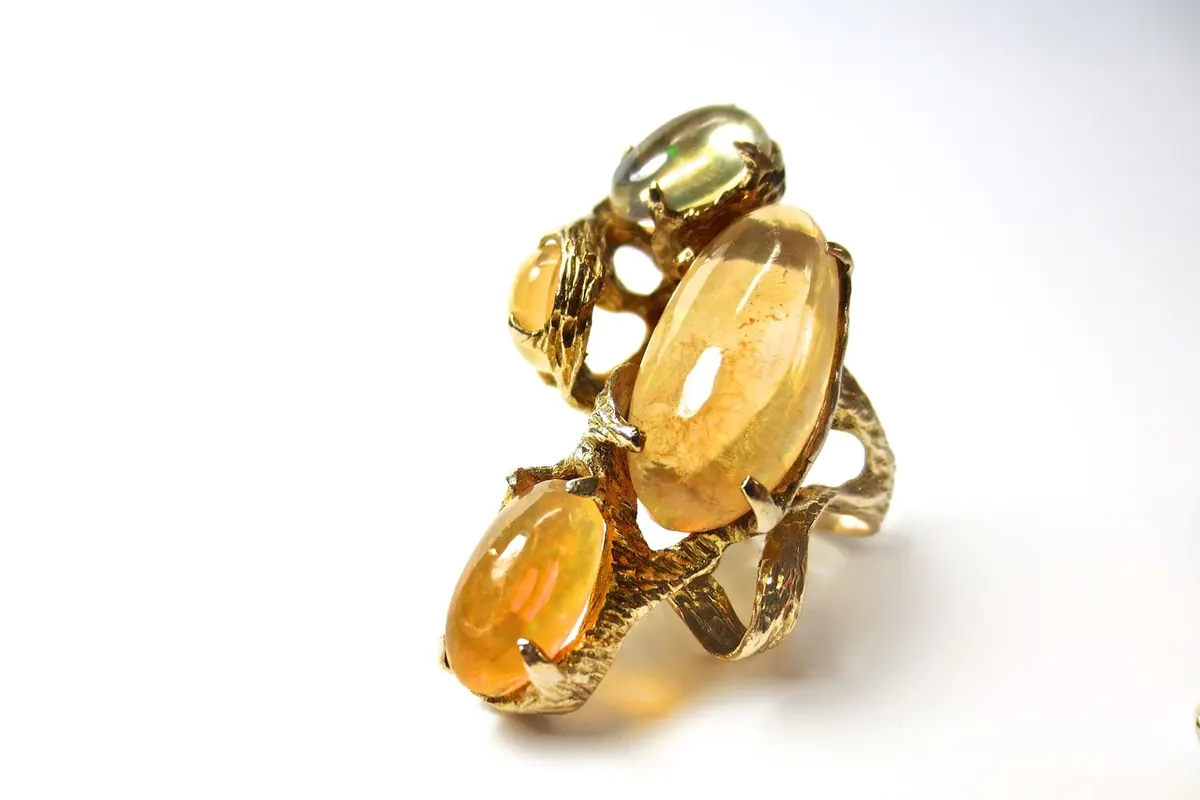
Opals are not difficult to live with, but they reward a lighter touch than diamonds or sapphires. A good opal holds water inside its silica structure, it sits around six on the Mohs hardness scale, and plenty of pieces sold as "opal" are actually assembled from two or three layers glued together. Get the method right and a quick clean at home is perfectly safe. Get it wrong and you can cloud a stone, lift a cap, or scratch the very surface that throws the colour.
First, Work Out What You Are Cleaning
Before you reach for water, look closely at the piece. The correct method depends entirely on what kind of opal is sitting in that setting.
Solid opal
A solid opal is natural opal cut and polished as a single piece, whether it is a pale crystal opal, a dark black opal or a boulder opal with ironstone still attached. This is the most forgiving type to clean, and the simple routine below is designed for it. It is still soft enough to scratch, so treat it like a polished fingernail rather than a window pane.
Doublets and triplets
A doublet is a thin slice of opal glued to a backing. A triplet adds a clear quartz or resin cap on top. The glue line is the weak point: prolonged soaking and warm water can soften it, and then the layers separate or go cloudy. If you own a doublet or triplet, skip the soak altogether and wipe it with a barely damp cloth, then dry it straight away. If you are not sure which type you have, assume it is a doublet and clean it the cautious way.
The setting matters too
An opal set beside pearls, emeralds or glued-in stones needs the gentlest treatment of everything in the piece. Silver that has gone dark is a separate job: use a silver polishing cloth on the metal only, never a liquid dip over the whole ring, because those solutions are acidic and will attack the opal.
What You Actually Need
- Lukewarm water in a small bowl
- Two or three drops of mild, pH-neutral hand soap or baby shampoo
- A soft makeup brush, a clean artist's brush or a very soft baby toothbrush
- A soft cotton towel and a lint-free cloth
- Optional: a soft, dry polishing cloth kept aside for metal only
That is the whole kit. Nothing on that list costs much, and nothing on it can harm a solid opal when it is used sensibly. Dish soap, washing-up liquid, bleach-based cleaners and jewellery dips do not belong anywhere near this stone.
A Safe Step-by-Step Clean
- Set up a safe surface. Lay a towel on a flat, well-lit table. Work over the towel, not over a sink, so a dropped stone cannot disappear down a plughole.
- Check for damage first. Look for chips, hairline cracks or movement in the setting. If the stone is loose or cracked, stop and take it to a jeweller instead of cleaning it.
- Mix the bath. Fill the bowl with lukewarm water and add a couple of drops of mild soap. It should feel neither warm nor cool on your wrist.
- Soak briefly. Solid opals only: two or three minutes is plenty. This softens the oils and hand cream that dull the surface. Never leave an opal soaking overnight.
- Brush gently. Work the soft brush around the stone and into the setting with light, circular strokes. Pay attention to the gaps where dirt collects, but do not press hard or scrub at the face of the stone.
- Rinse or wipe. Rinse in clean lukewarm water, or wipe with a damp cloth if you are being extra careful. Do not run it under a hot tap.
- Dry it properly. Pat dry with the towel, then leave it flat to air for half an hour before polishing. A final buff with a soft dry cloth brings back the shine. Avoid a hairdryer entirely; the heat is a genuine risk.
What to Avoid
Most opal damage at home comes from well-meant cleaning with the wrong product or the wrong machine. These are the offenders worth remembering.
Tools and products
- Ultrasonic and steam cleaners. Both are far too aggressive for opal, and both can destroy the glue in a doublet or triplet.
- Bleach, ammonia, vinegar, lemon juice and descalers. All are chemically hostile to opal.
- Silver and gold dips. Convenient for metal, disastrous for the stone.
- Toothpaste, baking soda and abrasive polishes. They scratch the surface and leave it permanently hazy.
- Hot water and drastic temperature changes. Moving an opal from a hot rinse to cold water stresses it.
- Hard brushes, kitchen sponges and paper towels. Paper fibres and rough scourers leave fine scratches.
Everyday habits that do more harm than dirt
Perfume, hairspray, sunscreen and body lotion all leave a film that dulls play of colour, so put your opal jewellery on last when you are getting ready and take it off first at night. Remove rings before washing up, gardening, swimming or showering; chlorine and hot water are a poor combination. And do not store opals loose in a box with harder stones, because a diamond or sapphire rattling against an opal will scratch it in a drawer.
Care Between Cleans
A ten-second habit keeps opals looking bright: after wearing, wipe the piece with a soft dry cloth to lift skin oils, then put it away. Store it in a soft pouch or a lined compartment of its own. A cool, dark drawer is ideal; avoid sunny windowsills, radiators and very dry, hot spots, as opals are known to craze — develop a network of fine surface cracks — and heat and dryness are usually blamed. If you live somewhere with very dry air, a closed jewellery box is kinder than an open dish on a shelf.
When to Let a Jeweller Take Over
Some jobs are not for the kitchen table. Take the piece to a jeweller if the stone is loose in its setting, if you can see a crack or a cloudy patch spreading, if a doublet or triplet has started to lift at the edge, or if it is an antique or particularly valuable opal. Ask for someone who works with opals regularly, and say upfront that you do not want it put through an ultrasonic tank. Cleaning a stone in a workshop costs far less than replacing one.
A Routine Worth Keeping
Clean solid opal jewellery every few months, or whenever it stops catching the light, using lukewarm water, a drop of mild soap and a soft brush. Dry it fully, polish it gently, and store it on its own. Treat any assembled stone more gently still, and leave the chemicals well alone. Done that way, a good opal will keep its fire for decades.
Photo: sarakgraves / Pixabay